Monday, May 20, 2013

Sourdough Spelt Brownies

Print Friendly and PDF

The Sourdough Surprise for May is brownies. You want to know something funny?  I don’t think I’ve ever made homemade brownies before. Can you believe it?  We’ve always just used the boxed mix to make them. I know, I know.  What’s up with that! 

I have another confession. I’m a milk chocolate fan. However, it’s not really good for you with all the sugar and other artificial ingredients so I try to limit my intake of it. I like dark chocolate when it’s mixed with other ingredients to cut down on the bitter taste, and it’s definitely better for you, but I’ve always preferred milk chocolate.

These Sourdough Brownies are made with the ancient grain Spelt. My whole grain Spelt levain was the only starter that was ready to be used so I decided to find out how it would do in this recipe. It did just fine. In addition to using the Spelt levain instead of a regular sourdough starter, I adjusted the bittersweet chocolate/cocoa powder ratio because I didn’t have quite enough bittersweet chocolate.

sourdough-brownies020


These brownies have a very pronounced dark chocolate flavor as you can imagine. They are a little bit tangy from the sourdough, and since this recipe uses less sugar, the bitter chocolate flavor shines through.  If you’re a fan of dark chocolate, then you will probably like these. I’m learning to like them. I definitely plan to make brownies again using dark chocolate, but I think I prefer a little more sugar. Next time, I might swirl some raspberry or strawberry jam through the middle to help balance out the dark chocolate flavor.


Sourdough Spelt Brownies

I adapted my recipe from Jenni of the Gingered Whisk’s Mega Chocolate Sourdough Brownies. Jenni adapted her recipe from Susan of Wild Yeast’s Sourdough Brownies.

Ingredients:

  • 235 g bittersweet chocolate, chopped
  • 226 grams unsalted butter, cut into pieces (~2 sticks)
  • 200 grams sugar
  • 6 grams (1 tsp) salt
  • 8.4 grams (2 tsp) vanilla extract
  • 3 whole eggs, room temperature
  • 105 grams cocoa powder
  • 220 grams mature 100% hydration sourdough starter


Directions:

Preheat oven to 325 F.

Line a metal 9x13 pan with parchment paper and coat the paper in butter (if you leave some hanging over the long 13" edges, it makes it really easy to lift the brownies out of the pan!).

In a double broiler, saucepan, or the microwave, melt the chocolate, cocoa powder, and butter. Stir it often so it does not burn.  I didn’t read the instructions all of the way before I started (you never do that, right!) so I melted all of the chocolate together rather than sifting the cocoa over the mix after whisking in the sugar and vanilla. You can follow my instructions below or use the original recipe referred to above.

sourdough-brownies001


Pour the melted chocolate/butter into a large bowl. Whisk in the sugar, salt and vanilla. Add the eggs one at a time, whisking to combine each addition. Add the starter and stir gently until it is completely incorporated.

Turn the batter into the prepared pan and bake for about 40 minutes, or until a toothpick inserted into the center comes out clean.

sourdough-brownies004


Cool in the pan 20 minutes (if you can), then lift the parchment paper out and allow to cool the rest of the way on a wire rack.

sourdough-brownies005


When the brownies are completely cooled, cut into squares and enjoy!

sourdough-brownies024

This was a challenge for me taste wise, but I figured it was time I learned how to make homemade brownies with real dark (bitter) chocolate and sourdough to boot.

Update on my taste test: These brownies seem to improve with age. The sourdough gives them better keeping quality so I’ve been enjoying them even though it’s been several days since I made them.


Happy Baking!

Cathy


I enjoyed baking along with the Sourdough Surprises baking group. 

Wednesday, May 15, 2013

Let’s chat about Whole Wheat Crackers

Print Friendly and PDF

Hello and welcome! Are you’re wondering where in the world the Bread Experience has been? I’ve been to London to visit the Queen… well, not exactly, but I have been to London, and I did see Buckingham Palace, as well as other parts of England, Scotland, Wales and Ireland. I’m back in the States, but today I’ve jumped on the band, I mean Grain Mill Wagon to talk about baking with freshly-milled grains.

I’m continuing my discussion on baking homemade crackers. It’s seems that the cracker bug that hit me several weeks ago didn’t go away while I was in the UK. I’ve been busy making crackers ever since I got back.

I particularly like these Whole Wheat Crackers with Cardamom and Sesame Seeds. They have just a hint of cardamom to give the crackers a slightly peppery, spicy flavor.

whole-wheat-cardamon-crackers_0031


I’d love for you to join me so head on over to the Grain Mill Wagon to learn how to make these Whole Wheat Crackers.

Be sure to come back in the next couple of days to learn about my travels in the UK. I’ll be sharing some lovely photos of the countryside and my adventures with my son. I’ll even throw some bread in the mix here and there.

Happy Baking!

Cathy

Sunday, April 14, 2013

Sourdough Multigrain Bread with Ancient Grains & Overnight Soaker

Print Friendly and PDF

The bread of the month for the Artisan Bread Bakers’ Facebook group is a Multigrain Bread. The original recipe, from Pastry Affair, makes a simple multigrain bread using the straight dough method. With the straight dough method, the bread is made without any preferment.

I changed things up a bit by incorporating an overnight soaker to soften the grains and a sourdough starter to ferment the dough. I used white Spelt flour instead of bread flour, Einkorn flour instead of regular whole wheat flour and my EK (Einkorn) sourdough starter. I also added a little bit of honey to sweeten the pot.

Due to the inclusion of the sourdough and ancient grains, what I ended up with was a completely different multigrain bread; full of nutrients and fiber and easier on the digestive tract.

sourdough-einkorn-spelt-multigrain_034


I used my Einkorn starter for this recipe.  I had just fed all of my starters, but I used the Spelt and apple starters to make sourdough crackers.  The only starter I hadn’t used yet was the Einkorn starter so in the pot it went. A Spelt starter would also work well in this bread or you could use a starter made from white bread flour if you want to make it with regular wheat rather than ancient grains.


Sourdough Multigrain Bread with Ancient Grains & Overnight Soaker

Inspired by this Multigrain Bread from Pastry Affair

Makes: 1 Loaf

sourdough-einkorn-spelt-multigrain_0025


Ingredients:

Multigrain Soaker:

  • 1 cup old fashioned oats
  • 1/2 cup roasted sunflower seeds
  • 2 tablespoons flax seeds
  • 10 ounces tepid water

Final Dough:

  • 1 cup sourdough starter (I used this Einkorn Levain)
  • 2 cups white Spelt flour
  • 1/2 cup whole grain Einkorn flour
  • 1/2 teaspoons instant yeast*
  • 1 1/2 teaspoons salt
  • ~2 ounces lukewarm water (you might need more or less water, depending on whether you use a liquid or stiff starter)
  • Additional oats (and/or seeds) for garnish

* Due to the inclusion of the multigrain soaker, I added a little bit of yeast to help give some lift to the dough. 

Directions:

1) Make the Multigrain Soaker

The night before you plan to make this bread, place the oats, sunflower seeds and flax seeds in a small bowl and cover them with the water.  Cover the bowl with plastic wrap or a kitchen towel and let it sit overnight.

sourdough-einkorn-spelt-multigrain_01


2) Mix the Dough

The next day, whisk together the Spelt and Einkorn flours, salt and yeast in a medium bowl and set aside.  In a large bowl or in the bowl of your stand mixer, add the multigrain soaker and sourdough starter.

sourdough-einkorn-spelt-multigrain_05


Gradually add the dry ingredients to the wet ingredients and stir with a wooden spoon, Danish dough whisk or mix on low speed on the mixer.  Add the water and mix until the dough pulls away from the sides of the bowl.  If the dough is too dry, add a little more water, or if it is too sticky, sprinkle a little more flour until it becomes a workable dough.

sourdough-einkorn-spelt-multigrain_06


3) Knead the Dough

Remove the dough to a lightly floured surface and knead it gently. It’s easy to over knead Spelt so I only kneaded it for a short time, then I put it in a lightly greased bowl. 

sourdough-einkorn-spelt-multigrain_07


4) Bulk Fermentation

Cover the dough with plastic wrap or a kitchen towel and let the dough proof in a warm spot (about 70 degrees F.) for 3-4 hours. Fold the dough a couple of times during the first hour to help develop the gluten. 

sourdough-einkorn-spelt-multigrain_08


5) Shape the Loaf

At the end of the bulk fermentation, gently punch down the dough and let it rest in the bowl for 10 minutes.  Remove the dough to a lightly floured work surface.  Shape the dough into a rough rectangle.

sourdough-einkorn-spelt-multigrain_09


Fold the top third down and the bottom third up and gently press the edges together.

sourdough-einkorn-spelt-multigrain_10


Place the loaf seam-side down in a greased 9 x 5-inch loaf pan.

sourdough-einkorn-spelt-multigrain_12


Using a spray bottle, spritz the top of the loaf with water and sprinkle with oats (and more seeds if you like). 

sourdough-einkorn-spelt-multigrain_18


6) Final Proof

Cover the loaf with plastic wrap or a kitchen towel and let it proof for another 30-40 minutes, or until it doubles in volume.

sourdough-einkorn-spelt-multigrain_23


7) Bake the Loaf

Preheat the oven to 375 degrees F.  Bake the loaf for 40-50 minutes, or until the top is lightly browned and the bottom of the loaf sounds hollow when thumped.


8) Cool and slice the loaf

Remove the loaf from the oven and immediately remove it from the pan to a wire rack to cool completely before slicing and serving.

sourdough-einkorn-spelt-multigrain_00006


This bread makes a good sandwich bread.  I enjoyed it toasted with cheese and with peanut butter and jelly.


Happy baking!

Cathy

Monday, April 8, 2013

Reflections on Baking Grain-Free Crackers

Print Friendly and PDF

I’ve been bitten by the cracker bug. Once I started experimenting with different types of crackers, the floodgates were opened, and now I can’t seem to stop making crackers. It’s a whole new world in baking. There are so many possibilities. I’ve made crackers several times a week for the past few weeks. As can be expected, I’ve had some successes as well as some failures.

The other day, I was looking for a recipe to bake for an April Fools’ luncheon. We were supposed to bring a mock food or something that looked like something else. I had a hard time getting out of my bread box and thinking creatively for this one, but then it occurred to me that something grain-free would work. So I started looking for gluten-free or grain-free baking recipes. I finally found some grain-free crackers that looked edible.

grain-free-crackers_00013


I chose these particular crackers because of the beautiful photos on  http://thenourishinghome.com.  

If you want to bake these crackers,

Look for the recipe and instructions here.  Since baking with grain-free flours is still rather new to me, I didn’t adapt the recipe at all. I used Kelly’s recipe and method for making these crackers. She has several different versions to choose from and lovely photos to boot.


Problems are opportunities

They say that no problem is a problem, but an opportunity to learn and to improve. So what I decided to do with this post is to reflect on some of the issues I had with making these crackers and provide some helpful tips to make them better, at least from my perspective.

When I baked the crackers and tasted them, my first thought was that this was a failure. I didn’t think I liked them, but I couldn’t quite put my finger on what it was I didn’t like. I would taste a couple and think, “Oh! these are pretty good,” but then I would eat another one and think, “what is this?” The flavor seemed okay, but they just didn’t wow me. I figured it was because they were gluten-free and I just prefer grains. 

I really wanted to like these crackers so I decided to give them a fair shake. I went to the store and bought some grain-free crackers to try and determine what I liked or didn’t like about them. I fell in love with the store bought crackers. They tasted so good. I almost ate the whole box in one sitting.

It’s the texture, silly!

The store bought crackers were made with several different types of grain-free flours and the grain-free crackers in this post are made only with almond flour so we’re not exactly comparing crackers-to-crackers, but what I determined from that taste test (for me anyway) was that it’s the texture, the crispiness, that makes the difference. The store-bought crackers were really crispy. I loved that!

At this point, I went back to the grain-free crackers that I had made and tried them again. I had rolled some of them a lot thinner than others and I found that I really liked those because they were crispy and light. It was the ones that I hadn’t rolled thin enough that I didn’t like very much. The texture was just not quite right. I’m also not sure if I like the onion flakes in these crackers, but I think that’s a matter of personal preference. You can always substitute different seasonings.

grain-free-crackers_11


Roll them really thin

The key to these crackers is to roll them really thin. The thinner, the better and since you roll these out between sheets of parchment paper, it’s actually pretty easy to roll them thin. I just didn’t realize what a difference it would make, but I do now. Next time, I will roll them out thinner for sure.

grain-free-crackers011


A good starting point

I think this is a pretty good starting point for a grain-free cracker recipe and with some tweaking for personal preferences, it could work really well especially for those that aren’t able to eat wheat. If you decide to try these crackers, I would welcome your feedback on what you like or don’t like about them and what tweaks you made to enhance them.

Even though I determined that rolling the crackers thinner would improve them and make them worthy of bringing to a luncheon, I decided not to make another batch because almond flour is not cheap. I’ll experiment more with that flour another time. I brought a bowl of fruit to the luncheon instead. The bread lady with no bread made for a good April Fool’s joke for sure, but everyone enjoyed the fruit so it worked out okay in the end.

So my experiment with grain-free crackers continues…

Happy baking!

Cathy

Monday, April 1, 2013

Celebrate National Sourdough Bread Day

Print Friendly and PDF

Today is traditionally known as April Fool’s Day, but more importantly (to bread bakers at least), it’s National Sourdough Bread Day. National Sourdough Bread Day is a great way to celebrate breads made with ‘wild yeast’. Although most people associate sourdough with the ‘sour’ breads made in San Francisco, sourdough bread doesn’t have to be sour – unless of course, you want it to be.

A lot of artisan breads are made with sourdough starters rather than using dried yeast. I love experimenting with different types of bread made with sourdough. It is very rewarding to make a bread completely from scratch using ‘wild yeast’ developed in your kitchen and maintained lovingly and stored in the refrigerator. 

I have several of these pets, as I like to call my starters, living in my refrigerator. All of my starters are made with different types of flour, and I use them in different types of bread. Learn how to make each of these starters in my sourdough starters section. My favorite starter is featured in this post.

To help you celebrate this day, I’ve highlighted some fun ways to create, maintain and use your sourdough starter to make different types of sourdough bread. I hope you enjoy.


Creating a sourdough starter

My favorite starter is my apple starter. Although I enjoy using the other starters, this one has special meaning because I used apples that I handpicked from an apple orchard in the North Georgia Mountains. I also went for a hike that day and it was a very memorable experience. I think about those fond memories when I use this starter.  It’s like a memory in a jar.


How to activate a sourdough culture

Once you’ve gone through the trouble and delight of creating your own starter, you’ll want to be sure you continue to feed it properly so that it doesn’t die in the refrigerator. Learn this easy method of activating a sourdough starter even if it has been in the refrigerator awhile and hasn’t been fed recently.


Making Sourdough Breads

This is a fun experiment. If you’re like me and you have trouble discarding your starter when you feed it, just make more bread. I made Classic Sourdough Bread using one recipe, but two different starters. You end up with lot’s of extra bread so your friends will love you.


Pita of the Desert

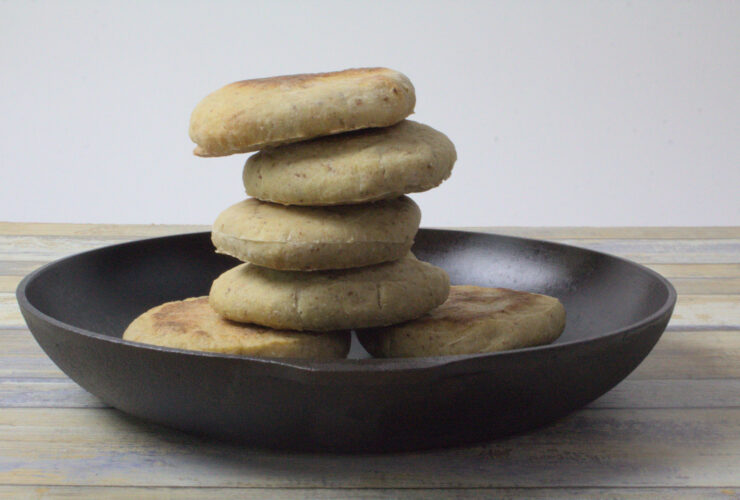
This sourdough bread is called Khubz Arabi or ‘Arab Bread’, but it’s also known as ‘Pita of the Desert’.  It is a soft, round flatbread that poofs in the oven and makes a great pocket to hold salad for a light lunch or dinner.


Sourdough Bagels on my mind

These Sourdough Bagels are made with a sourdough starter instead of an overnight sponge. They use the simplest of ingredients: starter, bread flour, salt, water, yeast and malt.


Sourdough Fantans with Jam Filling

These Fantans, made with sourdough and filled with delicious jam, were so delightful, they inspired a song. You’ll be singing it too once you taste them.


Sourdough Rye

This Sourdough Rye bread is made with toasted sunflower and pumpkin seeds. I really liked the flavor and texture of these breads. It’s a keeper!


Sourdough Spelt Loaf with Flax Seeds

You’ll enjoy the complex flavors in this 100% Sourdough Spelt Loaf with a flax seed soaker.  Spelt is versatile and healthy and makes a great addition to breads.


I hope you’ll try some of these breads. If you want to bake even more breads with wild yeast, visit my Sourdough Breads section. And, if you are interested in doing some fun and different things with your sourdough starter (besides making bread), check out the Sourdough Surprises baking group.


Happy Baking!

Cathy

Saturday, March 30, 2013

Einkorn Soda Crackers

Print Friendly and PDF

I really enjoy the Herbed Flatbread Crackers made by the Keebler Elves. They are crispy and herby and wonderful, but every time I buy them, I think I really should try making these myself. So I started down the road to discovery to try and make some homemade herb crackers that I like as much as the flatbread crackers. I don’t think the Elves need to worry about competition just yet, but I am beginning to build my cracker repertoire with these Einkorn Soda Crackers.

einkorn-soda-crackers_0011  

I started with the recipe for the basic soda crackers, but instead of using all-purpose flour, I used a 50/50 blend of whole grain Einkorn flour and all-purpose flour. I eventually plan to make an all Einkorn version, but I only wanted to change one variable at-a-time. I have a tendency to try to change too many things at once which is not always the best way to do things (in project management or baking) so I’m learning to work with the data to find out how each change affects the way the dough performs and tastes.

If I’m sounding more like a project manager right now rather than a baker, it’s because I had an ‘aha’ moment last weekend that I should be combining my project management expertise and baking to develop the best result rather than trying to separate the two disciplines. I mean ‘duh’, right?  


Einkorn Soda Crackers

Inspired by: The Keebler Elves and King Arthur Flour’s Soda Bread Recipe

Makes: About 45 crackers, depending on how small you cut the crackers

If you prefer, you can use regular whole wheat or white whole wheat or another flour and mix it with the all-purpose rather than using Einkorn. The total flour should be 1 1/2 cups or 163 g.

Ingredients:

  • 83 g (~ 3/4 cup) all-purpose flour
  • 80 g (scant 3/4 cup) Einkorn flour
  • 1/2 cup water
  • 2 tsps. instant yeast
  • 1/4 tsp. salt
  • 1/4 tsp. baking soda
  • 1/4 tsp. cream of tartar
  • 1 Tbsp. dough enhancer (optional)
  • 1 tsp. sugar
  • 1/2 cup water
  • 2 Tbsp. butter
  • 2 Tbsp. olive oil
  • Kosher salt, Italian seasoning (for the tops of the crackers)


Directions:

1) Mix the Dough and let it rest in refrigerator overnight

All you do is whisk together the dry ingredients; mix the liquid ingredients into the dry ingredients using a stand mixer (or by hand), then form the dough into a ball, place it in a clean bowl and put it in the refrigerator overnight (or for up to 18 hours). The dough probably won’t rise very much so you can use a small bowl.

einkorn-soda-crackers004


2) Remove dough from refrigerator

The next day, take the dough out of the refrigerator about 15 minutes before you plan to make the crackers. Let it rest on the counter before beginning to roll it out. I loved this dough. It’s buttery smooth due to the Einkorn, butter and olive oil.

einkorn-soda-crackers006


3) Shape the dough into a rough block

Sprinkle your work surface with flour. You can use a silicon baking mat or your counter. I used a bread board.

Before rolling out the dough, shape it into a rough rectangle, about 3x5 inches. Let it rest for a couple of minutes. This helps with the rolling process.

einkorn-soda-crackers007


4) Roll the dough into a rectangle

Roll it out into a rectangle, about 13 x 15 inches. I rolled out the dough onto greased parchment paper. Unless you use Italian-type flour, the rolling process will take a little while. You’ll just need to be patient. Since I used Einkorn/all-purpose flour blend, I had to let the dough rest every so often, then I kept rolling it until it reached the appropriate rectangle shape. I also sprinkled the board with flour several times to keep the dough from sticking.

einkorn-soda-crackers011


5) Fold the dough like a letter

Start with the shorter side and fold the dough like a letter-shape. I was focusing too much on taking photos and not paying attention to the instructions so I folded mine from the long end. I had to fold it again to make it easier to roll out. I did this the last time I made the crackers as well.  I guess I keep thinking I’m rolling the dough into a log. It’s a forgiving dough so it doesn’t mind which end you start on.

einkorn-soda-crackers009


6) Roll and cut the dough into squares

Roll the dough out again into a rectangle, about 11 x 19 inches. It will snap back so you should end up with a 10 x 18-inch rectangle.

Before I sprinkled the seasonings over the dough, I drizzled olive oil over it and spread it with my fingers.  I tried using a pastry brush but fingers work much better on this dough.

Sprinkle the dough with the salt or flavoring of your choice, then cut it into 2-inch squares. I used Italian seasoning, kosher salt and a little bit of garlic powder.

einkorn-soda-crackers016

I used a pizza wheel to cut the crackers. It made things really easy. I rolled out the dough on a wooden bread board so it didn’t matter what tool I used to cut the squares, but if you decide to use a silicon baking mat, you’ll need to be very careful when you cut the squares.


7) Place the crackers onto baking sheets

Place the crackers onto greased, parchment-lined baking sheets. You can place the crackers close together because they won’t spread. Prick each cracker one or two times with the tines of a fork. This will keep them from puffing up in the oven.

einkorn-soda-crackers018


A dough scraper works really well for this part. It acts like a mini pizza peel and keep the crackers from getting squished while you’re moving them onto the parchment and it allows you to move several at-a-time.

einkorn-soda-crackers017


8) Bake the Crackers

Bake the crackers for 10 minutes (at 425 degrees F.), then turn off the oven and let the crackers cool down while they are still in the oven. They should be golden brown in color and crispy. Letting them cool in the oven will preserve their crispness. If you’re oven doesn’t cool down quickly enough and the crackers continue to bake, you can pull the oven racks out a bit to keep them from getting too done.


9) Cool the crackers

Cool the crackers completely and wrap them tightly in plastic wrap or put them in an airtight container to keep them crisp.

einkorn-soda-crackers030


10) Enjoy

I went a bit crazy with the herbs so when I tasted the crackers after they first came out of the oven, I thought “these taste nasty.”  The next day, I thought I would need to brush off some of the extra herbs but after resting on the counter (wrapped in plastic) the herbs had blended well with the rest of the cracker.  I enjoyed the flavor and the texture of the crackers.

einkorn-soda-crackers_0017


These crackers seemed to rise a bit more than the all-white version, but I liked the texture.  Since I had spread the olive oil over them and then sprinkled the herbs, they had a nice crunch to them.

einkorn-soda-crackers_00033

Serving suggestion. The combination of herbs in these crackers and the crunchiness makes them a great accompaniment to tomato soup. I enjoyed this for lunch the other day.


Happy Baking!

Cathy

Thursday, March 28, 2013

Sing to me my bread & crackle sweetly in my ear

Print Friendly and PDF

Every now and then you run across a gem. You know you’re onto something because it just resonates inside of you. It’s not something you can really explain, but you just know it when it happens. Well, it happened to me this past weekend.

white-poolish-bread_024

I didn’t go to the Asheville Bread Festival and I was really bummed, but I had been pushing myself too hard recently, and I just had to rest. Instead of fighting it like I normally do, I took a break from everything and spent time catching up with myself. It rained most of the weekend so it was a good time to just hibernate.

While I was sitting there trying to relax (which if anyone knows me, is a feat in and of itself), I picked up a bread book that I had gotten recently. The book is called Flour Water Salt Yeast: The Fundamentals of Artisan Bread and Pizza by Ken Forkish. Note: They are not paying me to say this and they did not send me a free copy of the book. I bought it myself, and I just love it.


Mr. Forkish’s method is inspired by the processes of Jim Lahey (My Bread) and Chad Robertson (Tartine Bread). I think that’s one of the reasons I like this book so much. All of his formulas are based on 1000 grams of flour which makes it so easy to follow and adapt. In fact, he provides tips on how to adapt his recipes. Nothing is left to chance.  

I was so inspired by the book that of course I had to bake some bread. I chose a bread that utilized an overnight poolish so it didn’t require much hands-on time the first day. I finished it Sunday afternoon and it totally lifted my spirits.

I fell in love with this bread the minute I took it out of the oven. I placed it on the wire rack to cool and as I was taking photos, it started to sing. It was a delightful melody. It crackled ever so lightly like a lover whispering in my ear.  I don’t know if I was just so spacey from exhaustion or what, but all I could think at the time was “I’m in love.”

white-poolish-bread_035


White Bread with overnight Poolish

Adapted from: Flour Water Salt Yeast: The Fundamentals of Artisan Bread and Pizza by Ken Forkish

Makes: One Loaf

Poolish:

Ingredient Quantity  
White bread flour 250 g 1 7/8 cups +1 tbsp.
Water 250 g 80 degrees F. 1 1/8 cups
Instant dried yeast 0.4 g scant 1/8 tsp.


Final Dough:

Ingredient Final Dough Mix Quantity  
White bread flour 250 g 1 7/8 cups + 1 tbsp.
Water 125 g 105 degrees F. 1/2 cup
Fine sea salt 10 g ~1 3/4 tsp.
Instant dried yeast 1.6 g 1/2 tsp.
Poolish 500 g all of the above


Baker’s Formula:

Ingredient Quantity in Poolish Total Recipe Quantity Baker’s Percentage
Bread flour 250 g 500 g 100%
Water 250 g 375 g 75%
Sea salt 0 10 g 2.0 %
Yeast 0.4 g 2 g 0.40 %
Poolish     50%


Process:

1) Make the Poolish

The night before you plan to bake the bread, whisk the flour and yeast together in a large bowl and add the 80 degrees F. water. Mix by hand or with a wooden spoon until it is thoroughly blended. Cover the bowl with plastic wrap and let it sit at room temperature (65 to 70 degrees F.) for 12 to 14 hours.  When the poolish is ready, it should be bubbly and almost tripled in volume.

white-poolish-bread_003


2)  Mix the Final Dough

The next day, after the poolish is fully mature, whisk together the flour, salt and instant yeast in a large bowl.  Pour the water (105 degrees F.) around the edges of the poolish to loosen it from the bowl. Then using a wooden spoon, pour the water/poolish mixture into the flour mixture.

white-poolish-bread_005


For the next part, you’ll need to get your hands wet. Using wet hands, mix the dough by folding it to thoroughly incorporate all of the ingredients (refer to my post on making Tartine Country Bread) The dough should be around 74 - 75 degrees F.

white-poolish-bread_008


3) Bulk Fermentation

Let the dough rest for 2 to 3 hours after mixing.  During this time, do two or three folds during the first hour after mixing the dough. I forgot to use 105 degrees F. water when I mixed the dough so I extended the bulk fermentation another hour to compensate for the overall temperature of the dough being lower.  I did several folds and turns during the first hour, then I let the dough rest for the remainder of the proof.

white-poolish-bread_010


4) Shaping the loaf

Mr. Forkish has a slightly different process because he bakes his loaf in a Dutch oven and he shaped his loaves into a fendue shape. I shaped my loaf differently and baked it in my combo baker so this is the process I used.  If you choose to use a different baker, you might need to adjust the shaping/scoring part so you don’t burn yourself when inverting the dough into the pot.

I only made one loaf so I didn’t need to divide the dough. I removed the dough to a lightly floured surface.

white-poolish-bread_011


Then I shaped it into a medium-tight ball and placed it seam-side up in a floured banneton basket.

white-poolish-bread_012


5) Proof the loaf

I lightly floured the top of the loaf and covered it with a kitchen towel.  Then I let the loaf proof in the basket for an hour.  Use the finger-dent test to know when the dough is fully-proofed and ready to bake. This just means you press your index finger lightly into the dough and if the indention remains, the dough is ready.

white-poolish-bread_013


6) Prepare the oven for Hearth baking

While the loaf is proofing, at least 45 minutes before it’s time to bake, preheat the oven to 475 degrees F. with the combo baker or Dutch oven or other bread baker on the bottom rack.  There’s no need to place a steam pan underneath because the covered pot will provide it’s on steam.


7) Scoring the loaf

For this part, be very careful that you don’t burn yourself because you’ll be working with a very hot pan. Keep your fingers, forearms and anything else away from the hot pot. I large heat-resistant oven mitt works great for this.

Carefully remove the preheated combo baker (using gloves) and invert the proofed loaf onto the bottom of the baker.  My loaf didn’t plop exactly centered in the pan so I shook the pot a little bit to even it out but it was still a bit uneven.

white-poolish-bread_015


Then I carefully scored the loaf using a lame.  Even though the rings of flour were a bit off in the pan, I thought the scoring turned out pretty well.

white-poolish-bread_017


8)  Bake the loaf

Cover the combo baker with the lid and place it on the bottom rack to bake. Bake the loaf for 30 minutes, then uncover the baker and bake the loaf for an additional 20 to 30 minutes. This is what the loaf looked like when I removed the lid.

white-poolish-bread_021


The finished loaf should be at least medium dark brown all around the loaf. This has always been the hard part for me because I don’t like to burn my bread, but I was a good girl and left the loaf in for the suggested amount of time. However, if your oven is hot like mine, you might want to check the loaf sooner.


9) Cool the Loaf

Carefully remove the combo baker from the oven and gently tilt it to remove the loaf. I just reached in using my oven mitt and lifted it out. Place the loaf on a wire rack and let the loaf rest for at least 20 minutes before slicing.

white-poolish-bread_042


After I let the loaf cool, I just couldn’t bring myself to slice it just yet. I wanted to look at it a bit longer. It’s very photogenic don’t you think?  I placed the cooled loaf in a paper grocery bag and let it sit overnight.

white-poolish-bread_34


10) Slice and Enjoy!

The next day, I sliced the loaf and sampled it.  I was not disappointed.  It tastes great with butter or dipped in oil and particularly good toasted with sharp cheddar cheese. It also makes a great sandwich bread.  I’ve been enjoying it all week.

white-poolish-bread_0025


And so, my love affair with bread begins anew with this White Bread with Poolish.

I hope you enjoy this bread as much as I did.


This bread has been YeastSpotted in the weekly bread roundup hosted by Susan of Wild Yeast.


Happy Baking!

Cathy

Thank you for visiting!

Feel free to leave a comment, or submit your bread experience. We'd love to highlight your story on The Bread Experience.

You might also enjoy...

Related Posts with Thumbnails